


On Tuesday (16 September), Brussels' elite policymakers and academics will gather to discuss the EU's progress in following up on Mario Draghi's landmark competitiveness report published a year ago.
The main recommendations of that report were to boost competitiveness through targeted industrial support and lower energy prices, reduce the regulatory burden and complete the single market.
At the high-level conference 'The Draghi Report: One Year On', attended by both Draghi and EU Commission president Ursula von der Leyen (who will both deliver a keynote speech), it is safe to say that most in Brussels so-far have been feeling underwhelmed by the EU's current trajectory.
A report by the European Policy Innovation Council think-tank found that only 11 percent of the Draghi report had been acted on.
And Draghi himself criticised the EU's accomplishments so sharply at an event in Rimini in August that von der Leyen felt the need to defend herself.
It was the humiliating US-EU trade deal that prompted the back and forth, but Draghi did not only attack a bad deal. He also criticised the EU's inability to finish the single market, which he clearly sees as a higher priority than rolling back existing environmental regulation and health protections, which has been the overriding concern of von der Leyen's second mandate.
More than anything it's been von der Leyen’s apparent failure to stand up to Donald Trump which has led Brussels' commentators to wonder whether ‘Super Mario’ wouldn’t have made a better candidate for the top job himself.
Domestically, though, it is the national capitals that have done most to obstruct progress on everything else Draghi deems important — from energy market integration to common debt and defence cooperation — all of which are moving at a snail’s pace.
China
During her State of the Union speech last week von der Leyen promised to present a roadmap to 2028 to ensure “clear political deadlines” to deliver on Draghi's single market, especially on finance, energy and telecommunications.
A more difficult question is whether Draghi's recipe itself has what it takes to deal with Europe’s greatest competitors, especially China.
The truth is that Chinese clean tech manufacturing, the global competitor his report partly seeks to address, is on another level entirely.
A report by the Net Zero Industrial Policy Lab published last week found Chinese clean tech firms invested €229bn to expand manufacturing around the world, roughly the size, adjusted for inflation, of the post-World War II Marshall Plan, as Dave Fickling calculated for Bloomberg.
Beijing has poured hundreds of billions into battery and other clean-tech sectors, which explains part of China's clean tech surge. But it has now evolved into something else: a tremendous surplus of skilled workers in clean-tech-adjacent sectors, which has become an organic driver of Chinese firms’ overseas expansion. And that may be far harder to replicate.
As Dan Wang, a research analyst at Stanford, writes in Breakneck, a recent book on China's rapid rise as a technological power, the real basis of China's manufacturing success is people.
China's manufacturing workforce numbers 100 million, more than three times Europe's and eight times the US.
"Beijing would love to claim that its technological sector developed through wise planning," he writes, but it is the combined "process knowledge," or the practical know-how, of its manufacturing workforce that has given Chinese companies their edge.
The sheer concentration of production sites is an added perk: "Almost always we fund someone in Shenzen by asking a guy who knows a guy whose cousin might be able to produce a few hundered thousand new screws," one anonymous Apple engineer is quoted by Wang as saying. Western policymakers expect innovation from research labs and universities, but in China "tech innovation emerges from the factory floor, when a product is scaled up into mass production," he writes, a consequence of "learning by doing."
“Know-how is hard to quantify because it's in people’s heads,” he writes, which arguably also makes it hard to replicate.
Where are the people?
"The lack of skilled workers is probably the number one challenge for the transition, even more so than finance and permitting rules," Jude Kirton Darling, deputy general secretary of IndustriAll Europe, a pan-European labour union representing over seven million manufacturing workers, told EUobserver back in 2023.
For all the attention on industry, markets simplification and investment, little in the Draghi report or the commission’s work is devoted to those who actually have to do the work. Schooling and training programmes are usually left to the remit of member states, but the lack of a stronger policy at the European level has not gone unnoticed.
The Centre for European Policy Studies (CEPS) previously criticised the Draghi report's treatment of skills and workers as one of its weakest elements.
Von der Leyen, in her 7,500-word State of the Union address last week, promised to "tackle key bottlenecks" flagged in the Draghi report — from "energy to capital, investment to simplification" — but made no mention of skills or workers.
And on Tuesday, none of the speakers is scheduled to address the fundamental challenge of how a smaller workforce, divided by fragmented educational and training systems, can realistically compete with China’s clean manufacturing behemoth.
The question is, therefore, whether EU policymakers, including Draghi, have yet faced up to the more human aspects of the competitiveness challenge.
Related Articles
Expert panel identifies key barriers and solutions for boosting European economic growth
As global economic power shifts and competition intensifies, Europe finds itself at a crossroads in defining its future role on the world stage. Leading experts gathered at Euronews headquarters in Brussels on 17 September to examine how the continent can restore its competitive edge.
Read More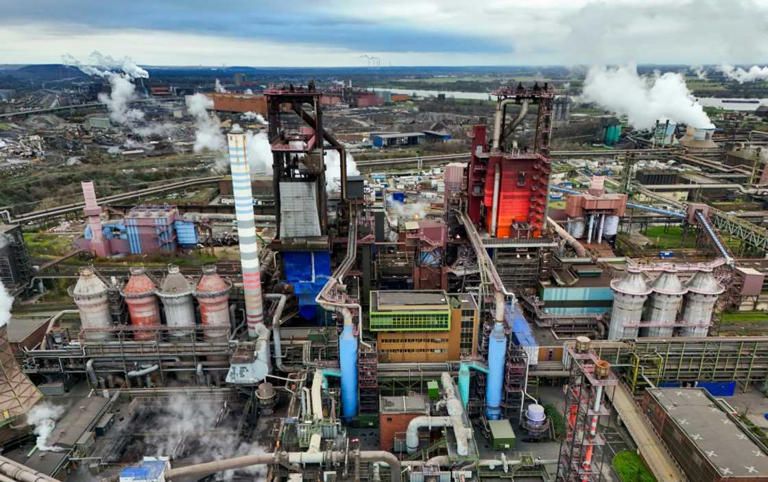
Europe slow to match economic rivals US, China: Draghi
Europe needs to act faster to overhaul its economy, said former European Central Bank chief Mario Draghi. Photo: Ina FASSBENDER / AFP/File Source: AFP
Read More
Europe slow to match economic rivals US, China: Draghi
Brussels (Belgium) (AFP) – The European Union is "failing to match the speed of change" in the United States and China and must act urgently on economic reforms to avoid falling further behind, a key report's author said Tuesday.
Read More